Weaning is a joy. It is also the first time you'll watch a person drop a piece of broccoli on the floor, look you dead in the eye, and drop another one. Your floor is going to see things.
You can't stop the mess. Mess is how babies learn what food is: squashing it, smearing it, dropping it to see what happens. But you can decide where it lands. Here's how to set up so the clean-up takes minutes, not the rest of the afternoon.
First, the bit that isn't about mess
The NHS recommends starting solid foods at around 6 months. Their Best Start in Life website (formerly Start for Life) has a short, clear guide to the signs your baby is ready, what to offer first, and the handful of foods to hold back. Honey before their first birthday and whole nuts before age 5 are two of them. It also explains how to prepare small round foods like grapes and cherry tomatoes: cut lengthways into quarters, never whole. Read it before the first meal. It's the most useful quarter of an hour of weaning prep you'll do.
Set the scene
The chair
Your baby should be sitting upright, well supported and facing you, and you stay with them for every meal and every snack. A high chair with a footrest gives their feet somewhere to be other than the tray.
Where you put the chair matters as much as which chair. Away from the wall, because food will reach it. Away from the curtains, for the same reason. And on a floor you can wipe. If the only option is carpet, now is the time to make peace with a mat.
The floor
Put a wipe-clean mat under the chair, bigger than you think you need. A cheap shower curtain works. So does an old tablecloth you're ready to say goodbye to. Aim for a good arm's length beyond the chair on every side. Babies have a surprising throwing arm.
If you have a dog, you already have a very keen volunteer. Just know that some things on a baby's plate, like grapes and onions, aren't safe for dogs.
The baby
Sleeves are where food goes to hide. Either strip them down to a vest, or use a bib that covers more than a postage stamp. A catch-all bib stops a lot of it before it reaches their lap, which is the difference between a wipe and a bath.
The plate
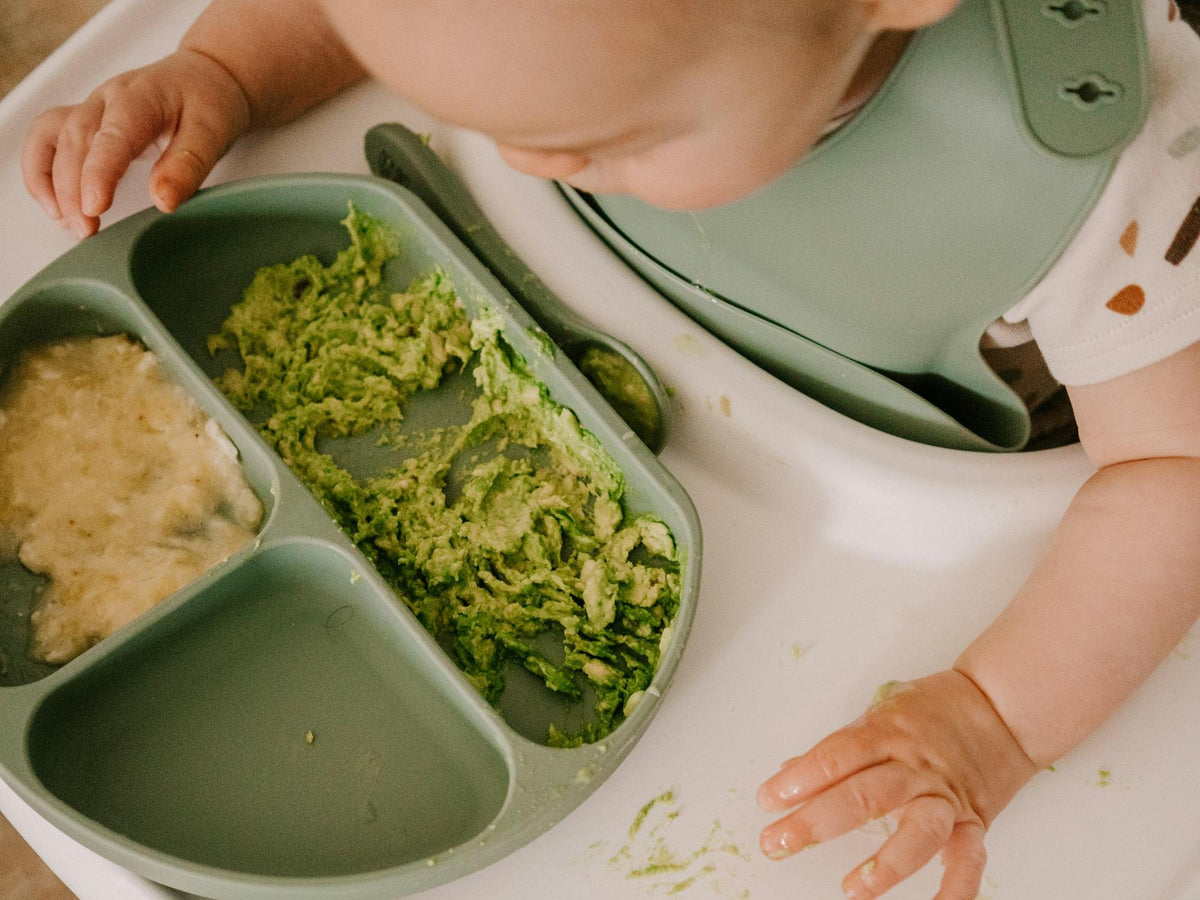
To a baby, a plate is a frisbee with food on it. A plate that stays put on the tray means at least the plate stays where you left it, even if the contents don't. You can also skip the plate entirely and put food straight onto a clean tray. Plenty of people do.

Gagging and choking: know the difference, then book a course
This is the part that worries most parents, so here it is plainly and in general terms.
Gagging is a normal part of learning to eat. It's noisy: coughing, spluttering, watery eyes, food pushed back out. It's your baby's body moving food away from the airway, and it often looks more alarming than it is.
Choking is different. It's when the airway is blocked, and it is often quiet. A baby who is choking may not be able to cough, cry or make much sound at all.
We are deliberately not telling you what to do if your baby chokes, because a web page is the wrong place to learn it. NHS Best Start in Life explains the difference and what to do. A baby and child first-aid course lets you practise with someone watching, which is the part that sticks. St John Ambulance and the British Red Cross both run them. Book one before you start weaning if you can, and if a partner, grandparent or childminder will be feeding your baby too, bring them along.
Before every meal
Baby sitting upright, you sitting with them, phone away, food the right size and texture for their stage. Then let them get on with it.
Cups from 6 months
The NHS suggests introducing an open cup or a free-flow cup from around 6 months, with sips of water at mealtimes. Expect most of it to go down their front for a while. That's learning, and it's why the bib stays on until the very end.
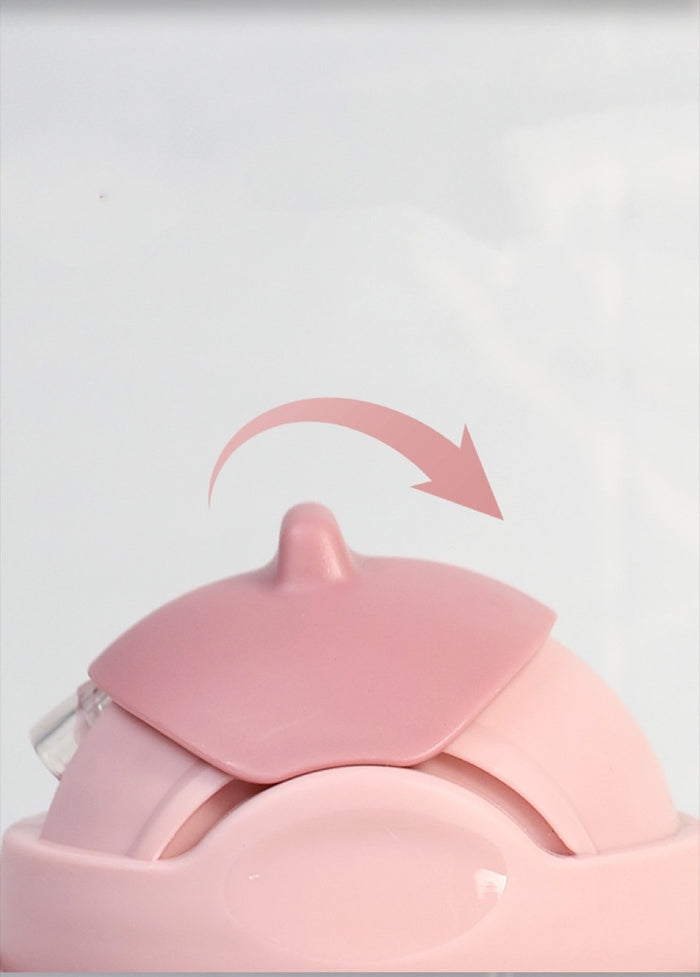
An open cup at the table is the messy, worthwhile option. Later on, for days out, a straw cup that works at any angle is a handy extra, and a snack cup keeps the raisins in the cup rather than the car seat.
The fast clean-up
Have a bowl of warm soapy water and a cloth ready before you start. Afterwards: baby out of the chair and somewhere safe, then wipe the baby, the tray, the straps. Lift the mat by its corners, tip it into the bin, wipe it down. Do it before anything dries. That's the whole trick.
Porridge sets like concrete. Wipe it while it's wet.
If you'd rather get the main pieces in one go, the Weaning Kit is on our kits page.
This article is general information, not medical advice. For anything about your baby's health, development or feeding, talk to your midwife, health visitor or GP, or call NHS 111.